Drivetrain Design
Learn about the intricate design aspects of drivetrains
Swerve
Swerve Overview
In FIRST, there are several types of swerve modules which have their own nuances dedicated to specific robot performance
Swerve X2i
- At YETI, we typically use the X2i modules. The 2 is for the 2 motors (one for turning and the other for driving) and the i is for the inverted placement of the motors. This module has a symmetrical gearbox and we prefer them due to their protection of the swerve motors and for the lower center of gravity (CG).
Swerve X2c
- The "c" stands for compact layout which positions the motors closer to each other to optimize the horizontal space. The X2c modules feature an asymmetrical gearbox and use a Kraken X44 for turning and can use an X60 or X44 for driving. Teams typically choose this due to its compact profile and wider wheels which allow for better traction.
Swerve X2t
- The X2t module is slimmer and has an asymmetrical gearbox. The "t" stands for thin layout, optimizing the vertical space. These specific modules take up more of the perimeter space of your chassis, but allow for more central space. This is good for full width intakes and other design choices which require this increase in central availability.
Inverted vs Regular
Regular swerve modules like the X2 have the motors placed above the module, making it more exposed to damage from colliding bots, requiring taller swerve covers (decreases vertical space and adds some weight). Inverted swerve modules are the desired choice as they are nested safely away from the top of the swerve module, meaning we only need a thinner swerve cover for the cancoder (much easier)
Mounting Swerve Modules
Swerve modules are bolted by either a corner mount or a tube mount
- Tube mount - Mounting style which has the 2x1s touching when positioned, allowing for stronger structural support, but the decrease in wheel base causes the robot to be more prone to tipping. You can find this mounting style on the 2025/26 alpha bot.
- Pro - Very structurally strong
- Con - Loss of wheel base and track, making less stable robot
- Wheel base is how far your wheel is distanced from front to back and track is how far your wheel is distanced from side to side, with the wider you go the better CG you accomplish
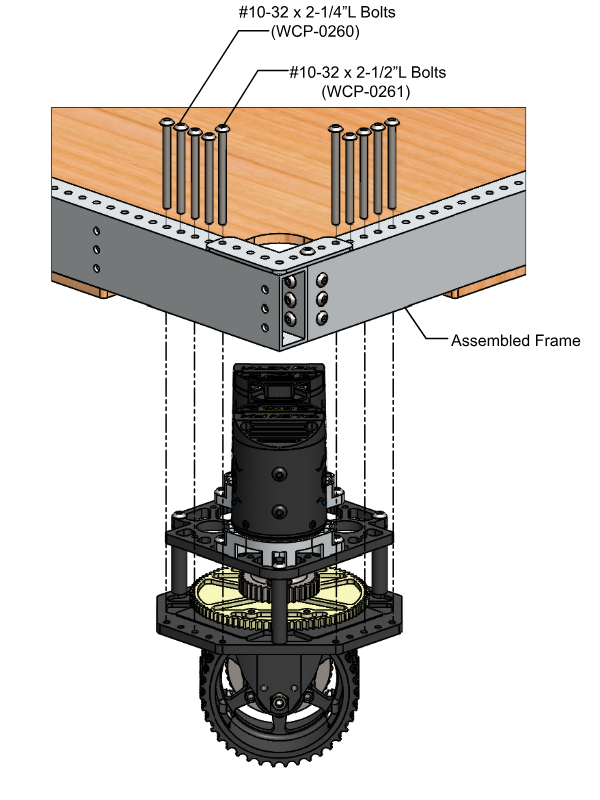
- Corner mount - Mounting style which has the 2x1s spread out from each other, with a gap in between. This increases the wheel base, but makes the overall structural support prone to taking more damage
- Pro - Wheel base spread out more, allowing for better speed and traction
- Con - Less strong, likely to bend plates
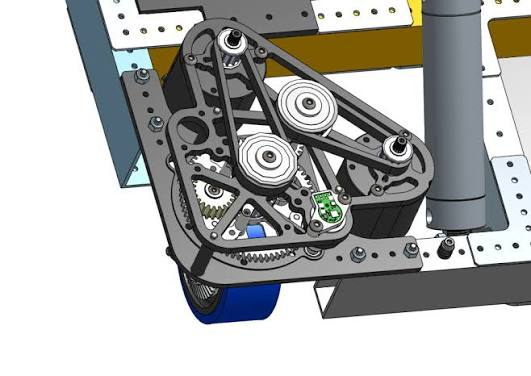
Mounting Choice
- Placing 2x1s under swerve mount allows for lower center of grav
- Placing 2x1s on top of mount good for going over rough terrain and integrating under the bumper intakes (like in 2024)
Frame
When constructing your frame, you'll need
1) 2x1s for the base (Qty - 4)
2) Bellypan (Qty - 1)
3) Frame Rails (Qty - 1 or 2)
Note
Wall thickness of .100" or thicker = thick wall (good for chassis due to durability and high impact resistance)
Bellypan
- Has small holes in certain areas known as grommet holes to allow for electrical components to mount, and has holes along the perimeter for mounting onto chassis. All bellypans have a cut extrusion pattern along the surface which saves weight and makes it look nice, which is known as pocketing
-
- Laser cut by sponsors
- Typically 1/16" to 1/4" in thickness
- Thicker bellypans have smoother driving due to lower center of gravity (CG)
-
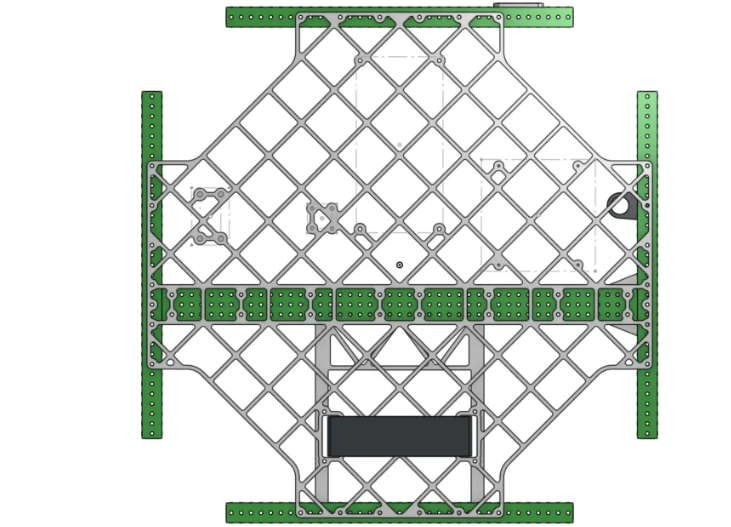
Pocketing
- Process of using a CNC or laser cutter to cut away material from a solid sheet of metal, leaving behind bits of metal known as ribs, which form a lightweight grid or lattice pattern. Common bellypan pocketing patterns include triangles, squares, rectangles and hexagons, but pocketing for other subsystems like shooters or intakes feature different patterns. In SolidWorks, you'd make the bellypan pattern by using the vent tool. As for the mounting holes it would just be a linear pattern which you would cut extrude.
- *ALWAYS have fillets when designing your pattern to avoid difficult to machine sharp edges*
- Any sort of pocketing should have ribs with a thickness of 1/8" to 3/16"
- *ALWAYS have fillets when designing your pattern to avoid difficult to machine sharp edges*
Frame Rails
- Frame rails are mounting tubes (1x1s or 2x1s) which are integrated into the frame design for structural support and for mounting separate subsystems like shooters, intakes, climbers, etc.
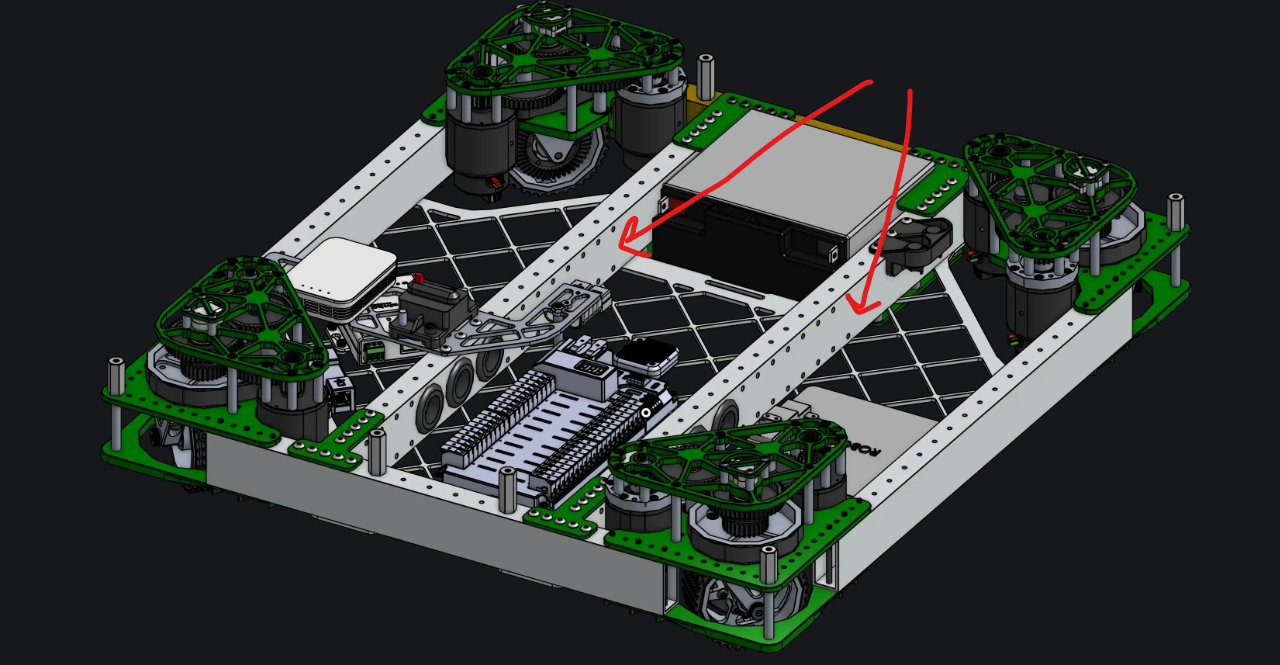
Design Considerations
- Place battery first when designing drivetrain as it is the heaviest component, so you can take CG into account (important for deciding how smooth your robot can drive)
- When designing your drivebase, your main goal should be maximizing CG while maintaining efficient mass to incorporate other subsystems in the future
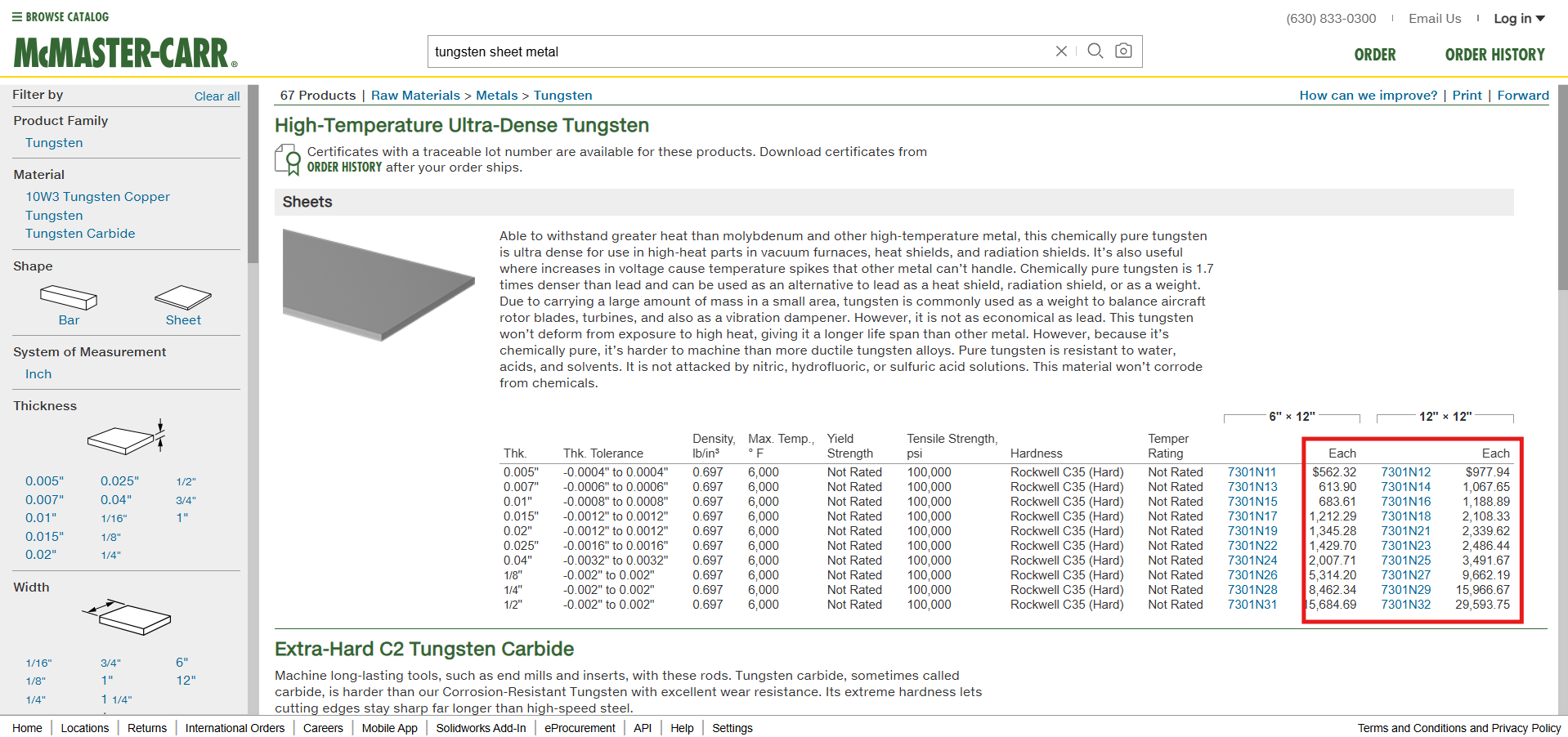
- Tungsten sheets are heavy and good for CG, but VERY expensive

Driving Characteristics
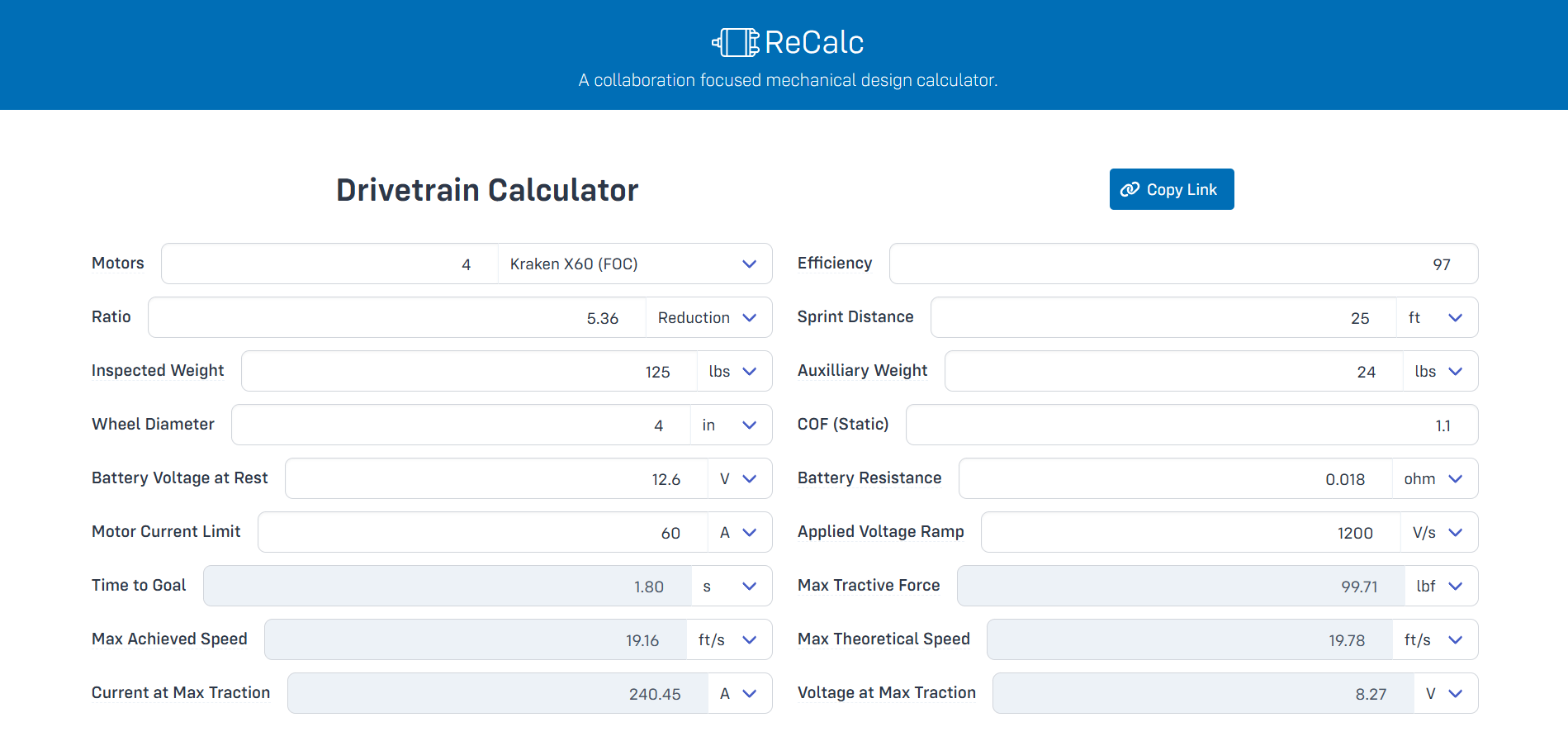
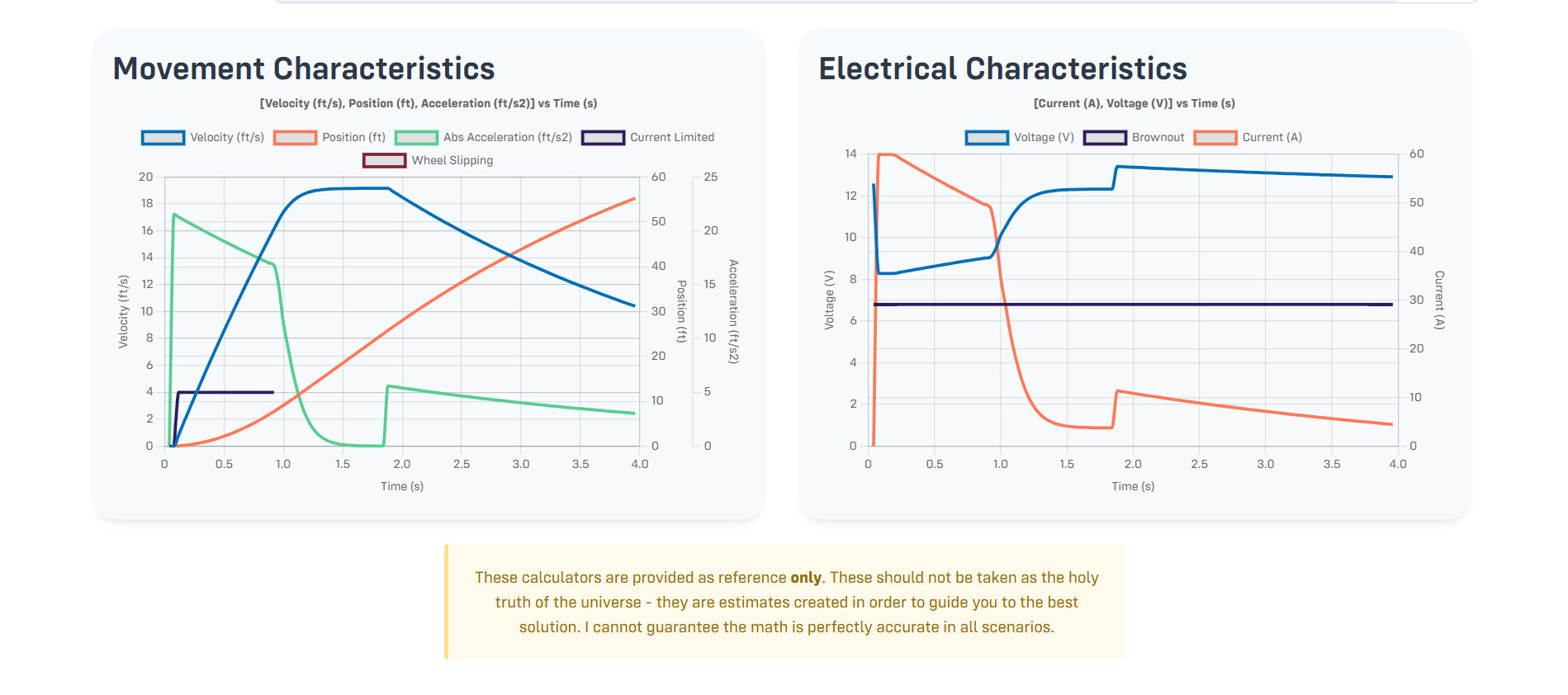
In FRC, every win, draw or loss is contingent on the design choices you make. When it comes to excelling at the game, the number one priority for every team is to drive, and to do it well. For the drivetrain, decisions like mounting your 2x1s above or below your swerve module mounting holes or choosing your bellypan thickness all play a part in your results. So here are some driving characteristics which you should acknowledge when designing:
- Swerve drivetrains are built for maneuverability rather than a pushing tank, which would be the job of a tank drive
- Acceleration is prioritized in games which require lots of change of direction and a need for a fast top speed accumulation
- Tall robots which have a need for speed require heavier drive bases to maintain balance
Gearing
When you design a drivetrain, you can either gear it for torque or for speed
- If your drivetrain is geared too tall, that means it takes too long to reach top speed but has stronger traction
- Robots geared too high will do better with pushing (which can be thought of like torque)
- If your drivetrain is geared for top speed and acceleration, that means it is very fast and can reach its maximum velocity much quicker, but the tradeoff being that it won't win many pushing matches
- Prioritizes speed over torque
For a deeper dive into drive base design, refer to the Drivebase Design page in the Design Process book.