Batteries
The powerhouse of the Robot
Preparation
Batteries are the powerhouse of the bot, essentially the mitochondria. Crimping and managing these batteries are essential to a successfully running robot that supplies power as it should.
I take heavy reference from the Zebracorns (Team 900’s) Battery Paper.
(Team 900's Battery Paper Chief Delphi Post)
1. How you begin
- Cutting out the battery wire is essential, and we plan on using 12 inches of battery wire for two-gauge wire to ensure strong connectivity.
- From there, the wire must then be stripped and crimped unto the lug crimp to ensure connection.
- You will also need to crimp the other end of the battery wire for it to be put into the SB Connectors.
2. Connection to the terminal…
- Use of any washers can reduce energy transfer and we usually cover our terminal connection with electrical tape and heat shrink.
- You know your battery isn’t working optimally if it shows visible signs of poor connection to the terminal.
Good way to check your batteries at comp:
Good Practices
Good practices:
-
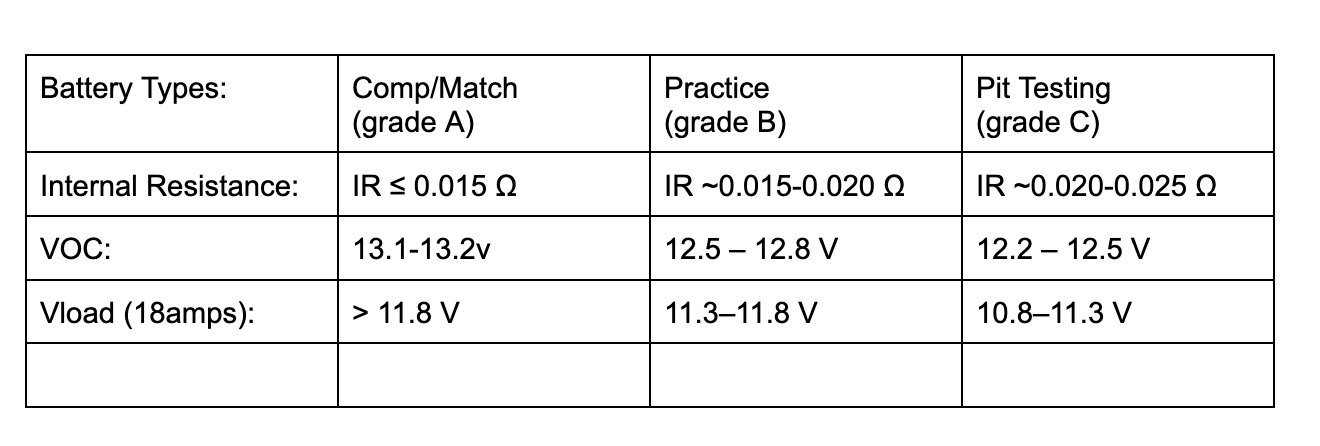
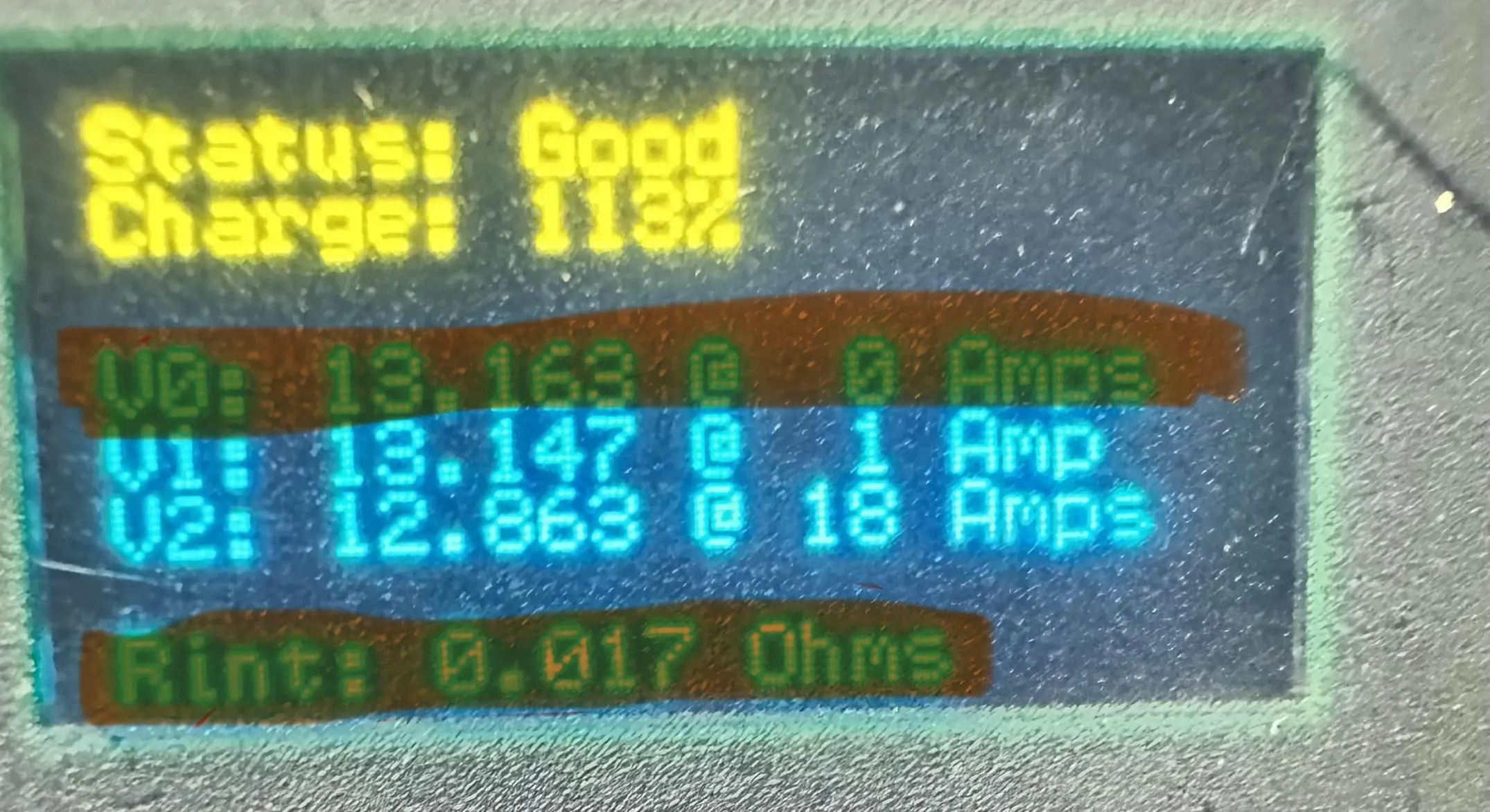
Using a battery beak can help determine the battery connection and “charge.” A common misconception is that if you see "Good 130%" on the battery beak, it's a good battery to use, but that's actually wrong. The 130% only says how long it has been off the charger, not the actual charge of the battery. You should actually be looking for the resistance and the voltage at 0 amps. The resistance should ideally be under 0.015 ohms(15 milliohms) for comp, and 0.020 ohms (20 milliohms) for practice or testing, and the voltage should ideally be over 13 volts.
-
However, you might need several batteries during the competition to ensure you have good batteries for all matches.
-
Labeling batteries is essential in the pits to organize and make sure you aren’t using a “dead” or used battery. It is also useful to make sure the battery is where it should be.
Scenarios
Scenario Responses:
-
If a battery is suspected not to work as it should, you can disassemble (like we did at World Champs 2024-2025 season) and check the connections, and make sure everything is as it should. This can include looking at the terminals and the connection between the power wires and making sure it is firm. Reassess and act appropriately.
-
If a battery is leaking quickly, neutralize the acid leaking from it and use battery spill kits. Try and keep the area safe and alert volunteers or officials if needed
Testing Batteries.
Battery Beak
The battery beak is a device that allows you to quickly test a battery and see if it is good to take and use. The main points to look for on the battery beak are V0 and the internal resistance. The voltage should be over 13 volts and the internal resistance should be under 0.015 ohms(15 milliohms).
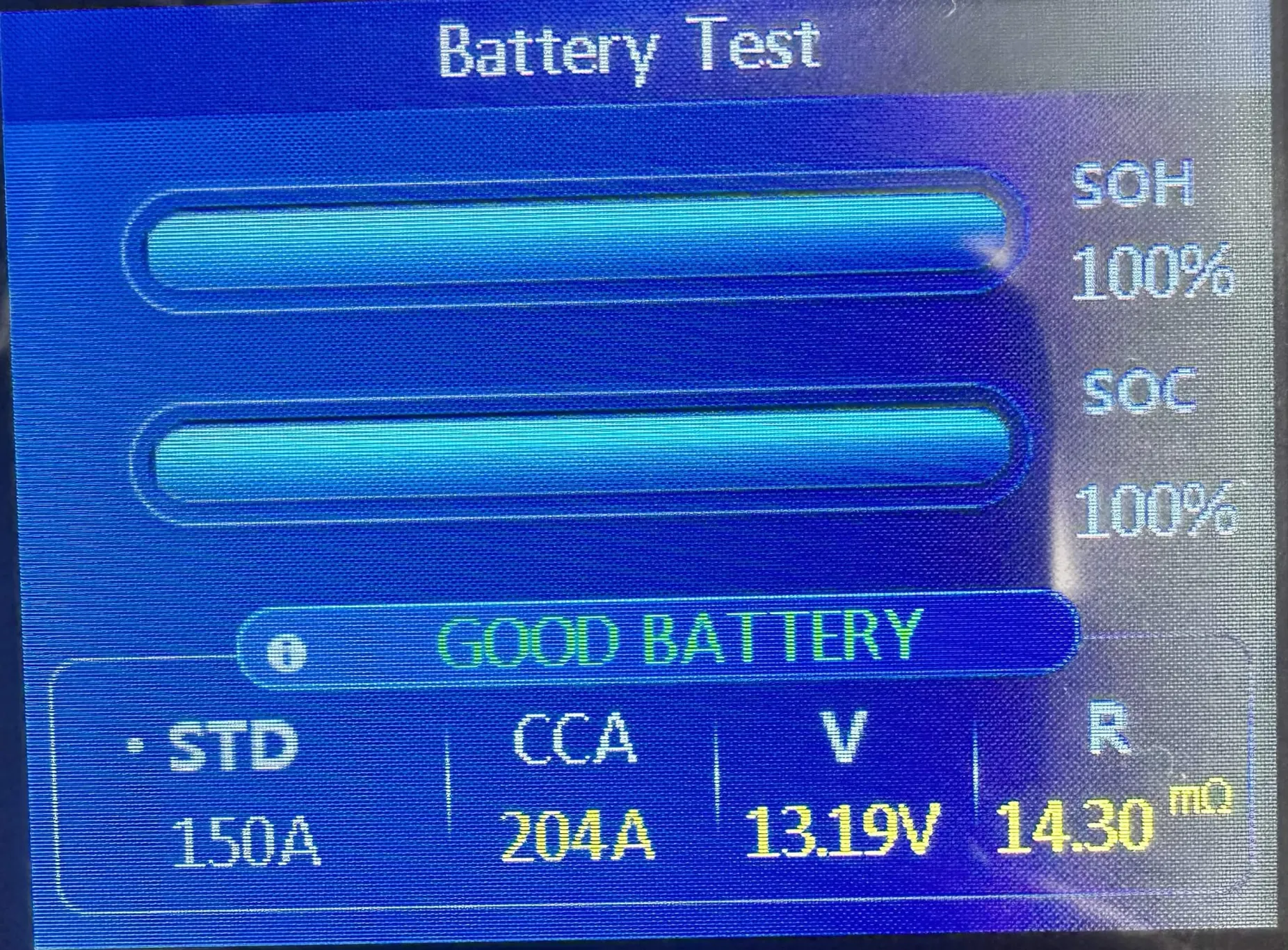
Automotive Tester
The automotive tester gives more accurate testing results and more data than the beak. It gives you the voltage and ohms just like the beak, but it also gives the SoH(State of Health), the SoC(State of Charge), and the CCA(Cold Cranking Amps). The SoH and SoC should ideally be 100%, but the SoH will go down over time with use. The CCA should be over 150.