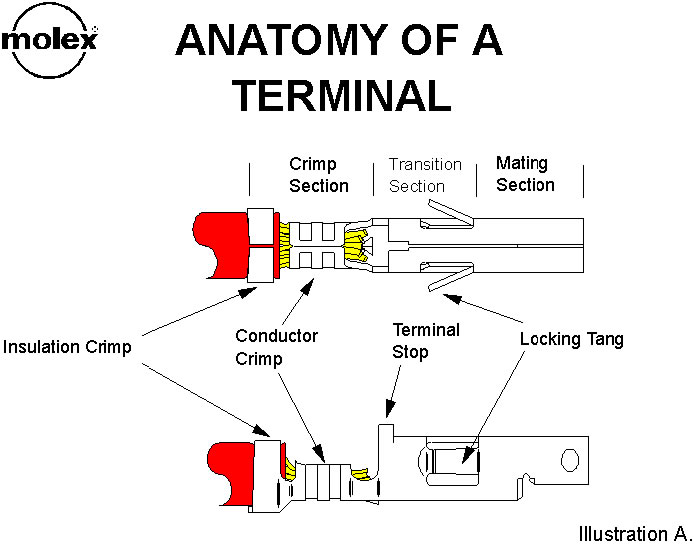
Molex Crimps
Introduction
Molex is the brand of crimps that we use in ensuring connection between 22 gauge wires.
This has been a challenge for some of our electrical students to mastering it is important for our robots power and CANbus.
Preparation
The first step in crimping these includes stripping the wire. You want to strip only a little off the wire because you will be crimping this inside the Molex. Less than half an inch is a good amount for this.
From there you want to take out a Molex Crimp
Before you start anything crimping-wise you want to make sure the crimp is cut properly. For male and female crimps the process is relatively the same.
Preparing Female Crimps:
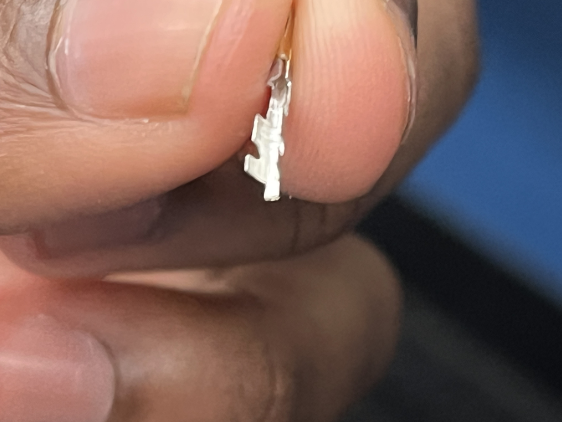
Figure 1
Your average female molex crimp will look like the image shown above in Figure 1. First you would want to utilize a blue pair of WORKPRO snips in order to get a clean, flush cut. Snip this flap off as shown in Figure 2 and Figure 3 below.
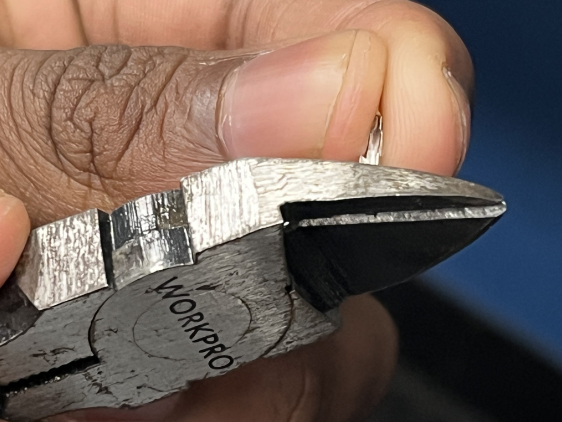
Figure 2
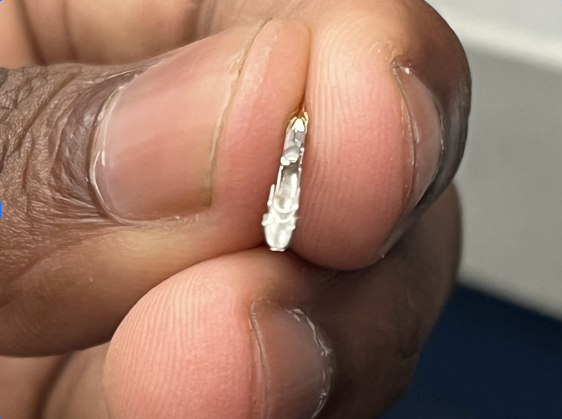
Figure 3
To note, females occasionally come with a flap on the top of the crimp. If the crimp comes with one, follow the same procedure as shown in Figure 2 and Figure 3 above.
Preparing Male Crimps:
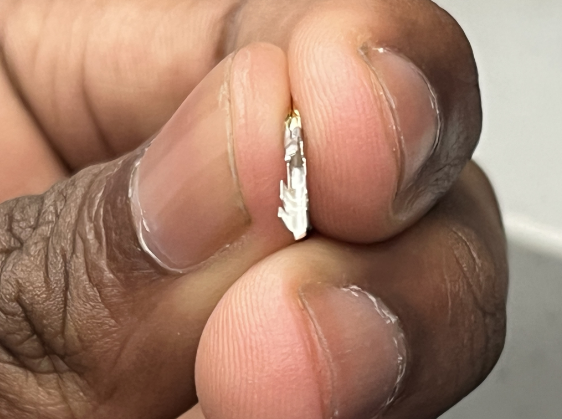
Figure 4
A normal uncut male molex crimp will look like the one shown in Figure 4. Grab a pair of WORKPRO snips and cut the flap off as shown below in Figure 5 and Figure 6.
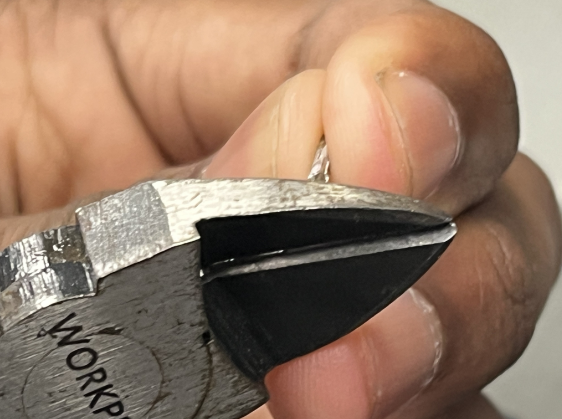
Figure 5
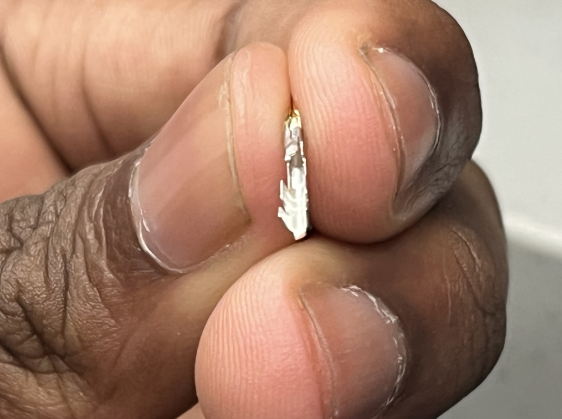
Figure 6
Next you would want to flip the crimp on the other side and clip this small little golden flap off as shown in Figure 7 and Figure 8. The finished product should have a similar appearance to Figure 9.
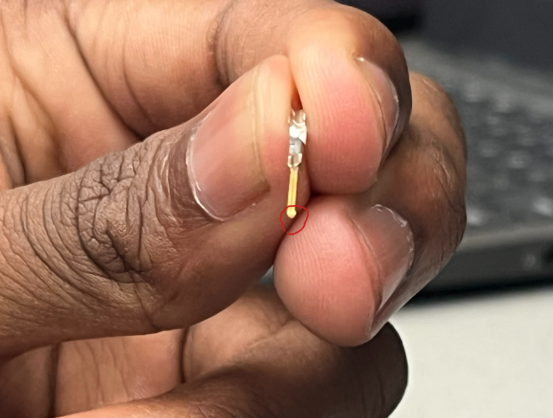
Figure 7
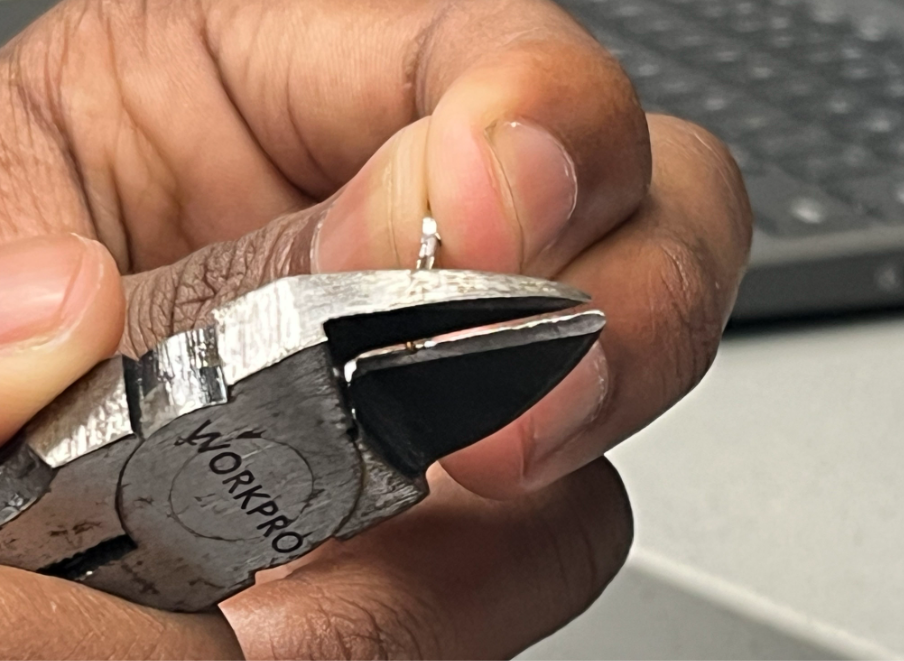
Figure 8
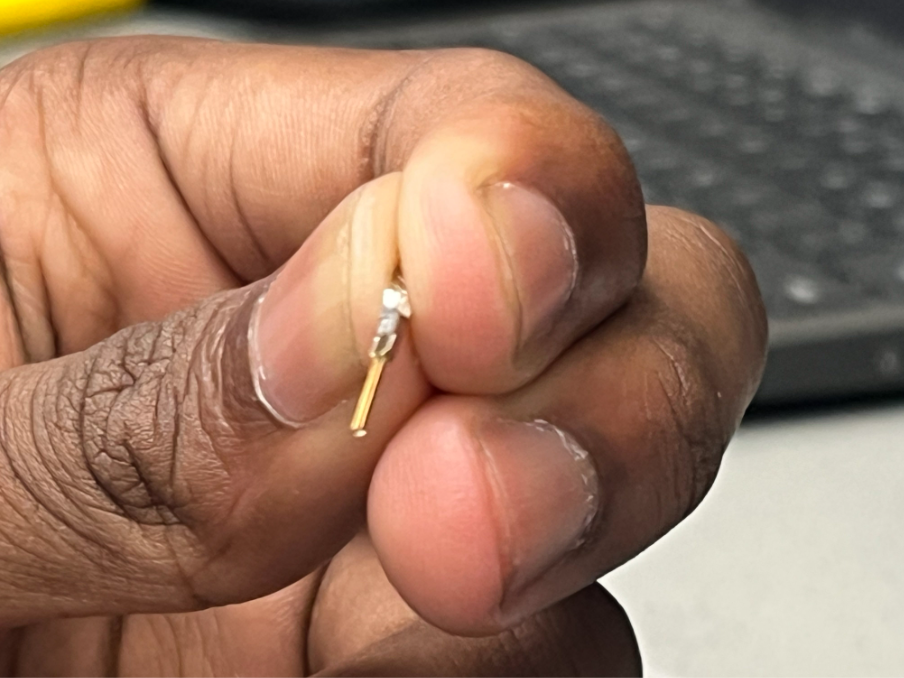
Figure 9
Great! You are now ready to crimp! First grab a pair of handy crimpers. There are two different type of crimpers we utilize. The first type of crimper is the Hozan P-707 this tool is comparatively more difficult to use than the Molex Premium Grade Insulated Hand Crimp Tool the second type of crimper. I will cover how to use both types of crimpers in detail below.
1. Hozan P-707 Crimping Instructions
From here, you want to adjust the molex crimp onto the stripped wire so that the “bottom” flap is on the insulation part of the wire and the “top” flap is on the copper wire. Make sure that you are not including too much insulation for the bottom flap and you want to be closer to the edge of the insulation.
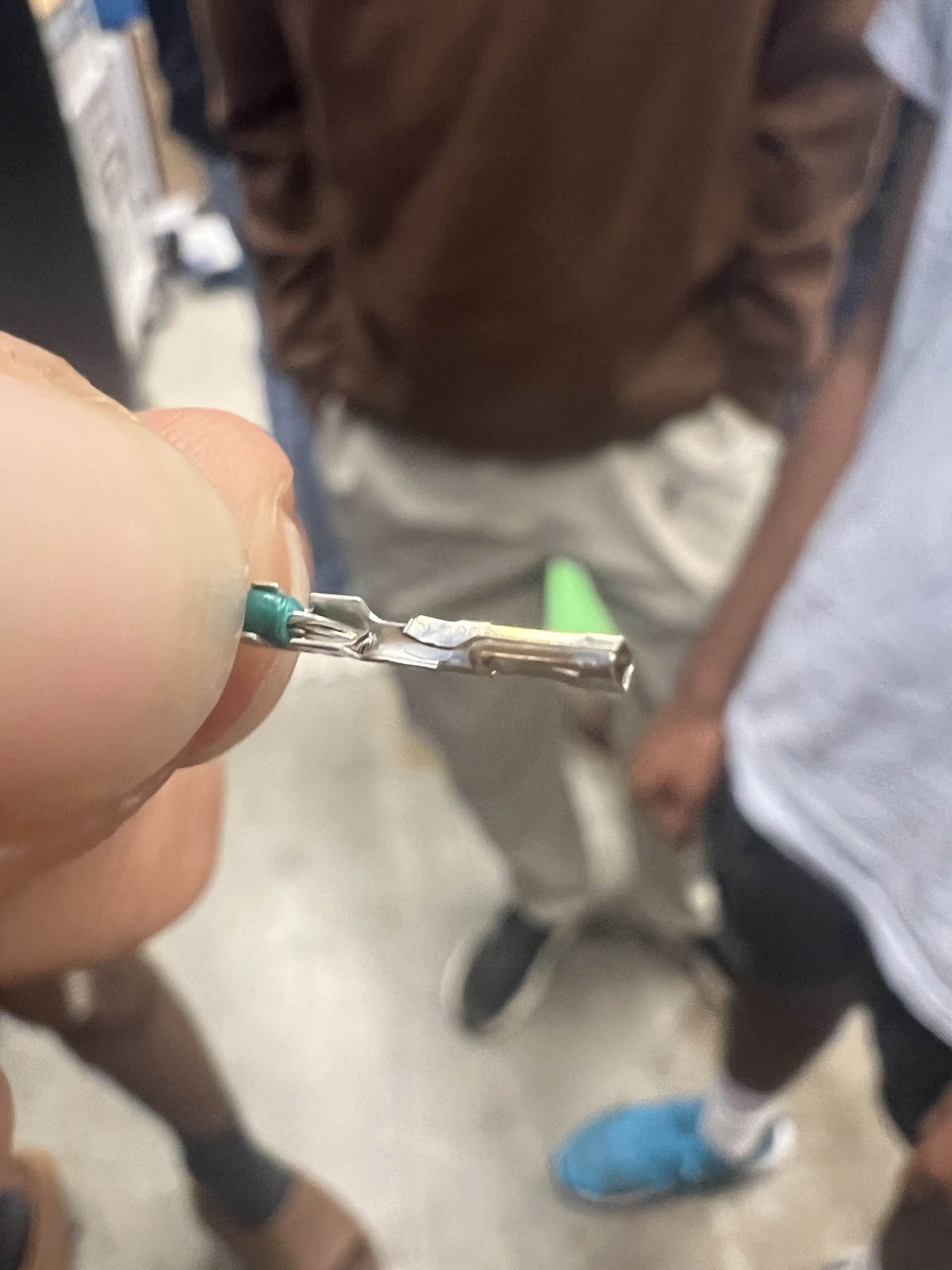
This is a side view:
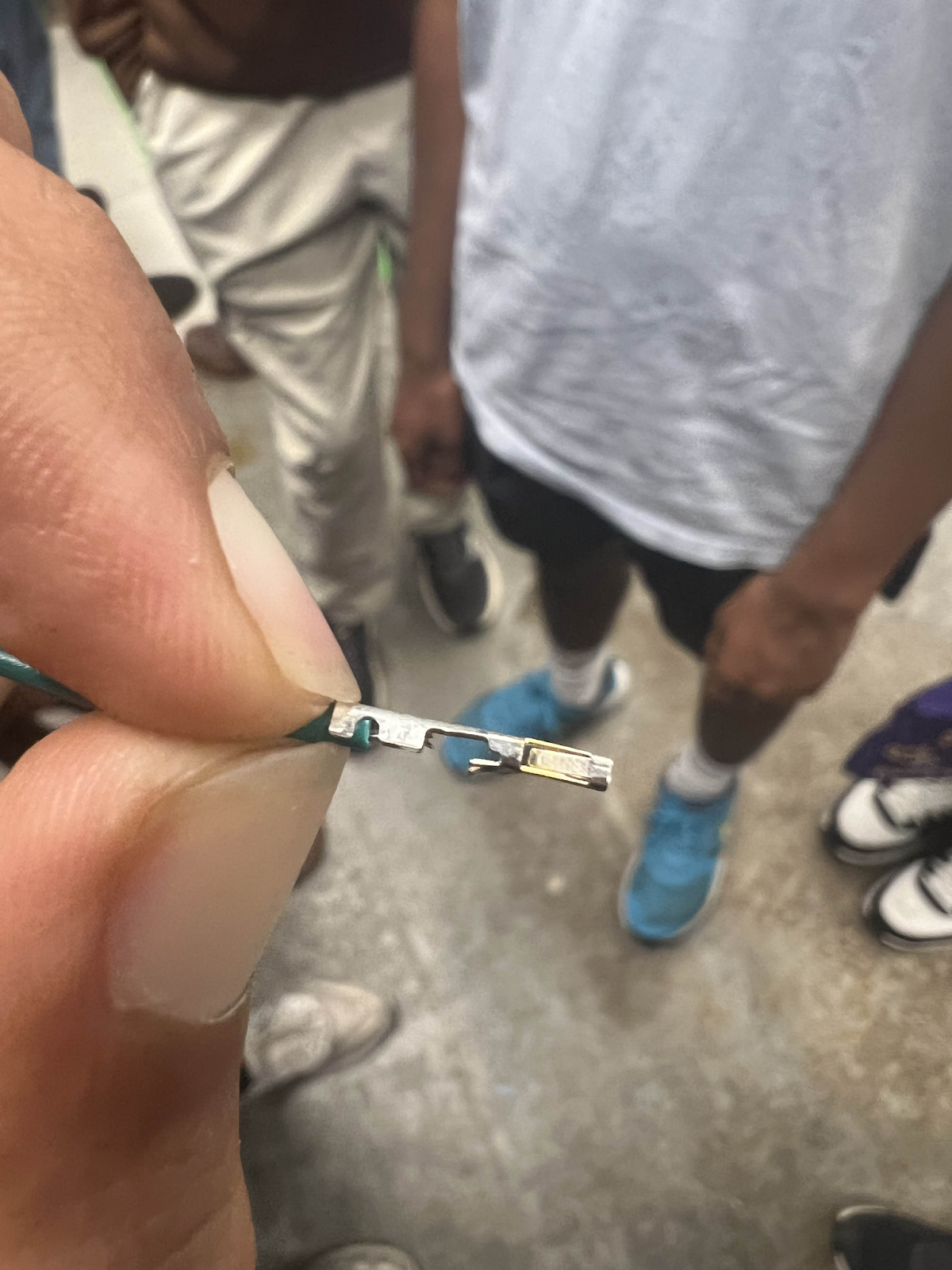
From there you are ready to begin crimping.
Take your crimp on the top flap to the side of the wire crimper that is labeled as “Conductor” and use the 1.7 Ridge in order to press down on the flap.
It should look similar to this:
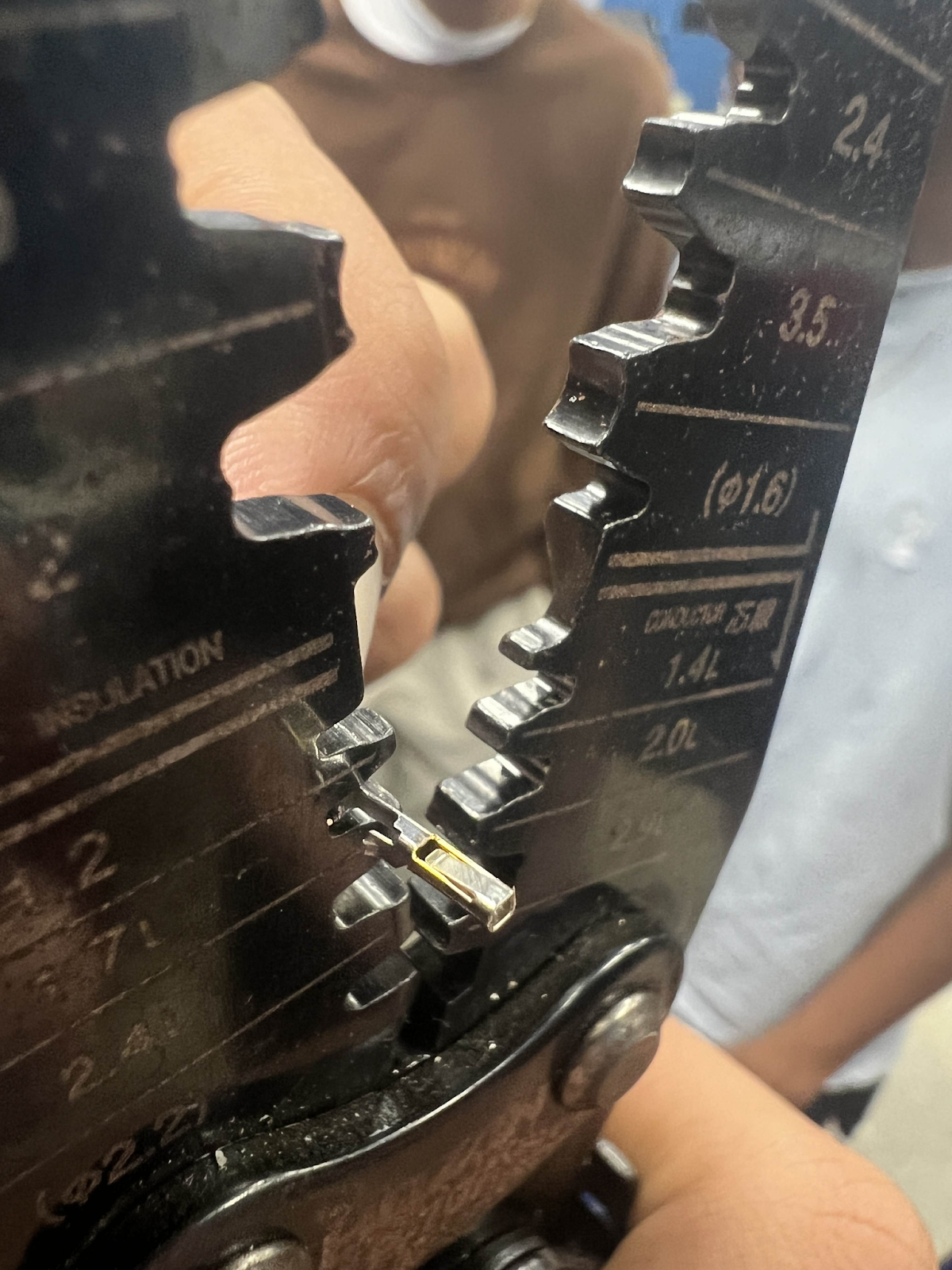
Take your crimp on the bottom flap to the side of the wire crimper that is labeled “Insulation”
You will use the 2.0 Ridge in order to press down this flap.
It should look similar to this:
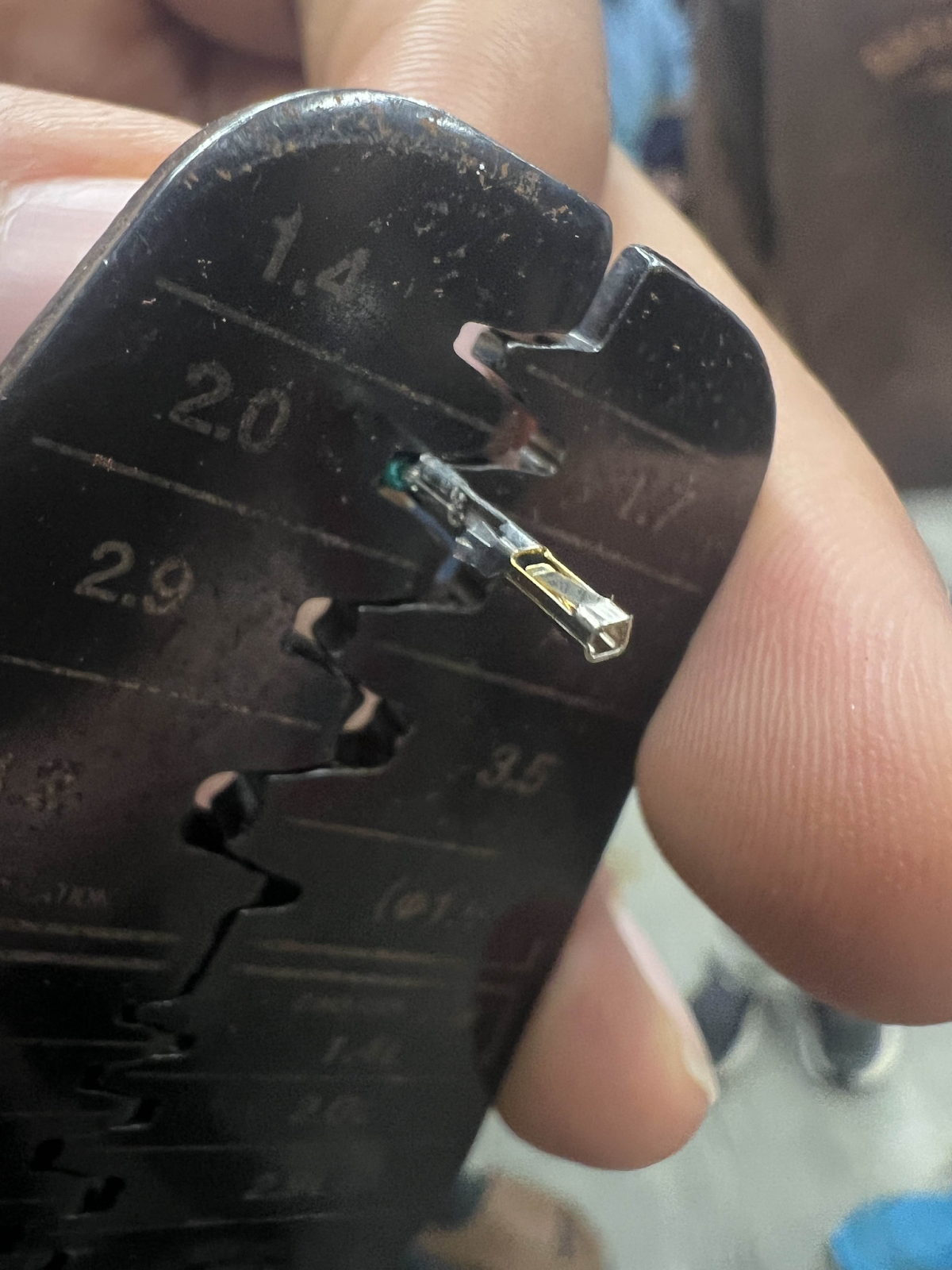
Your finished crimp should look like this:
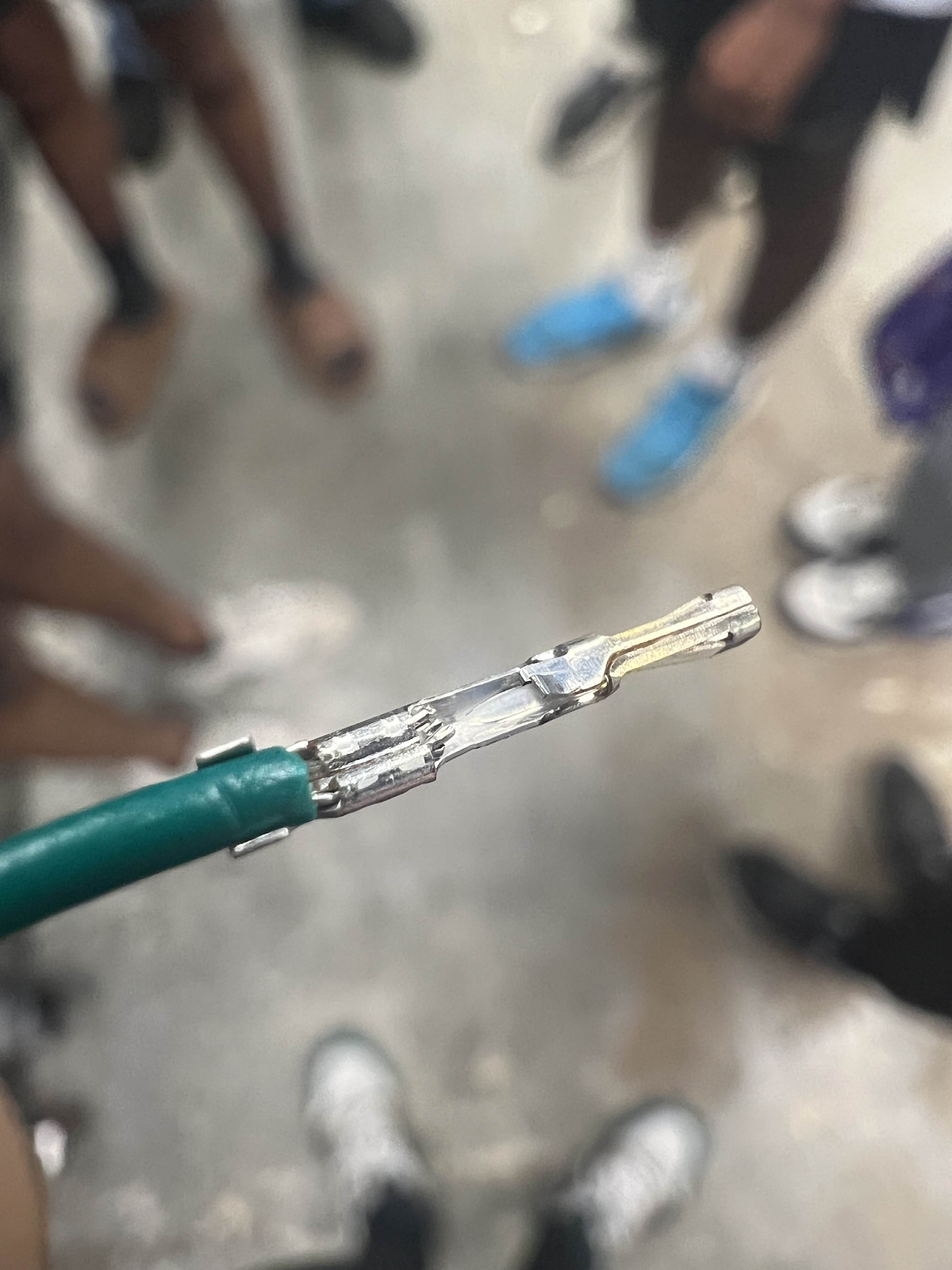
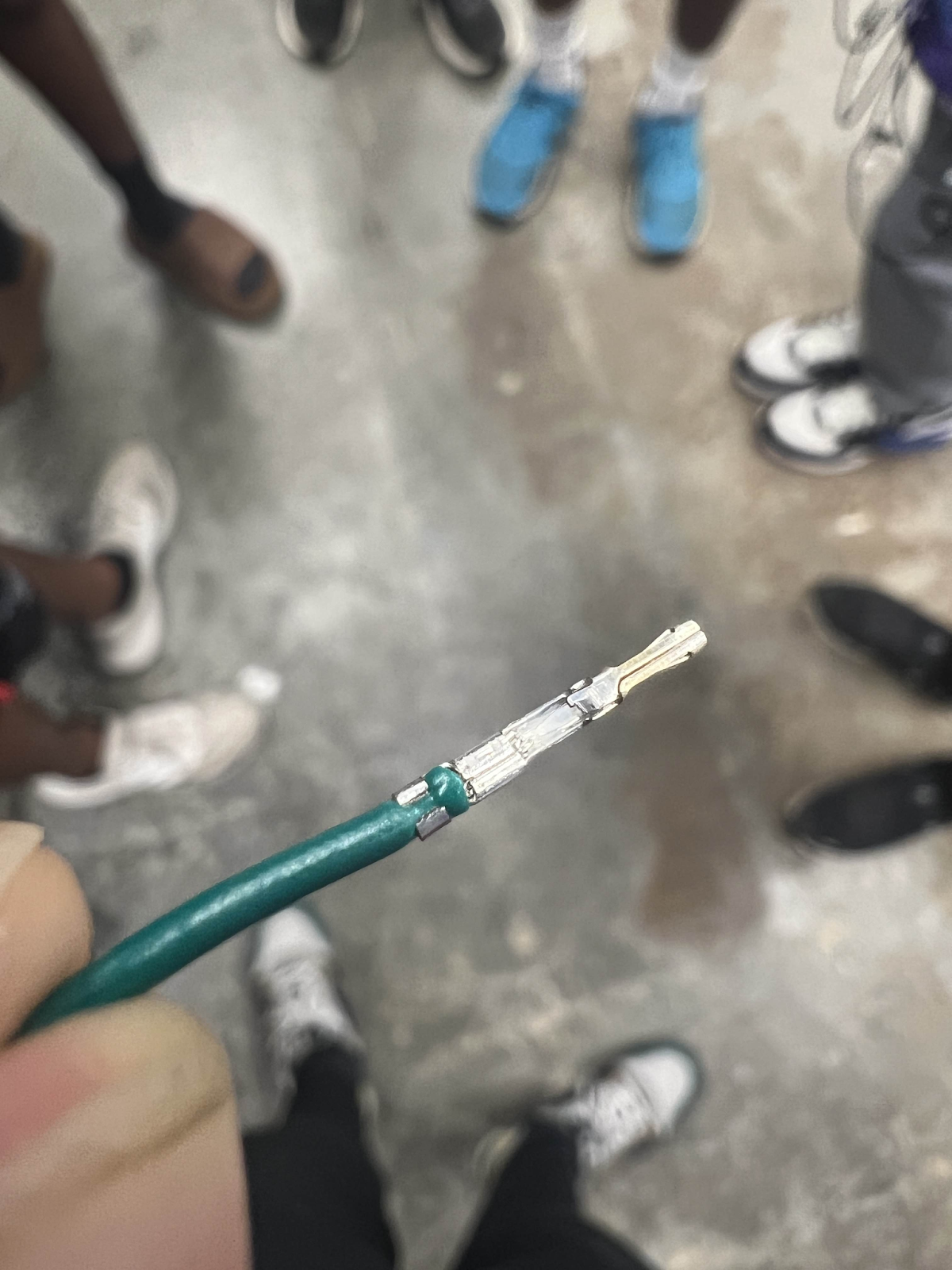
Finally, to assemble your crimps into the housing.
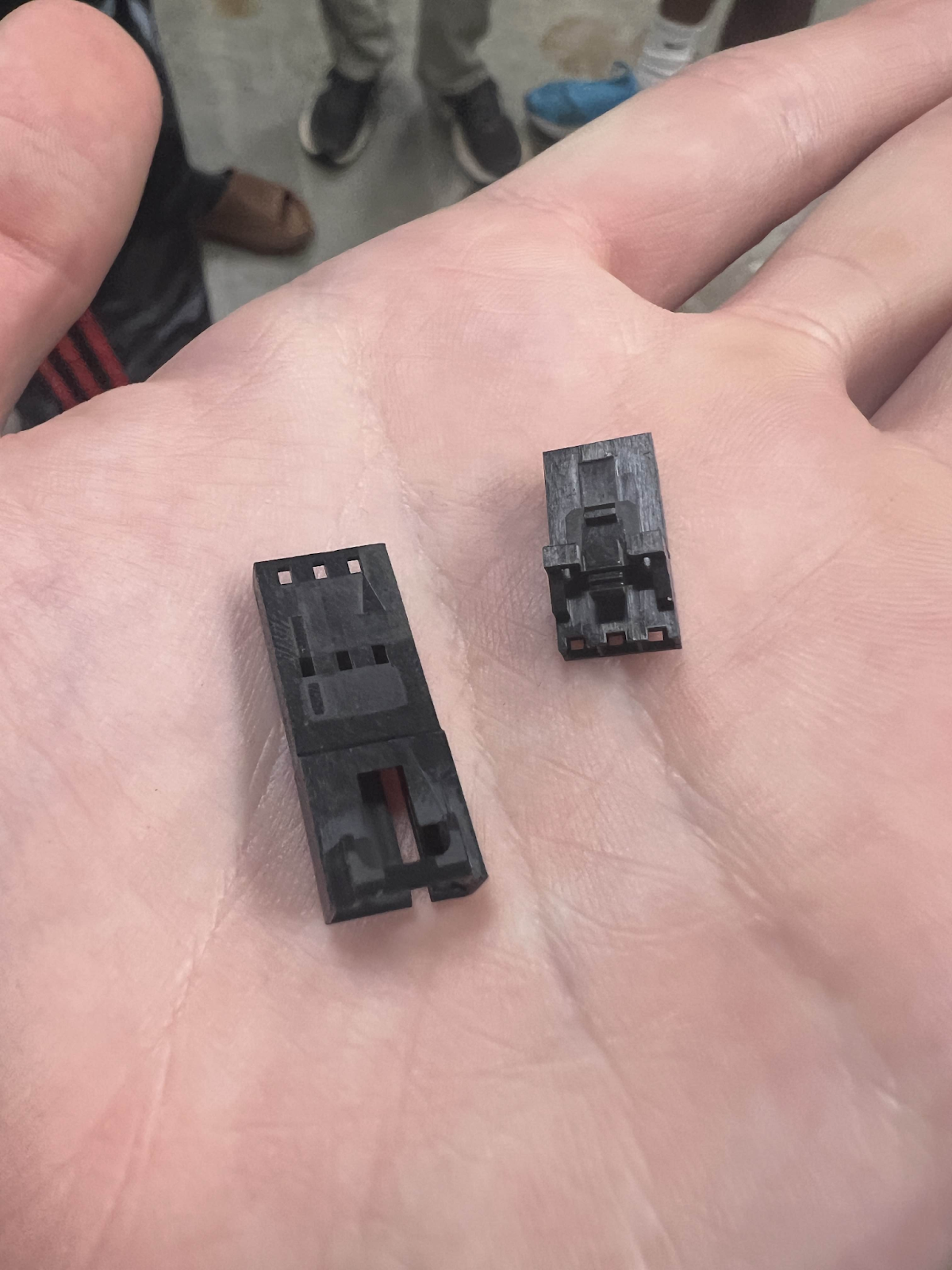
The housing on the left is for Male Molex Crimps whilst the right is for Female Molex Crimps
For standard FRC control system wiring, the black and red wires represent ground and power whilst the green and yellow wires represent CAN or Controller Area Network.
A rule that, as Mukesh quotes it is, “The lighter color goes onto the arrow while the darker color is on the opposite side” (FOR CAN).
To decipher this quote, it basically is a rule used to show where the different wires go in a housing.
For a 22-gauge power wire, the black (ground) wire is on the arrow while the red (power) wire is on the opposite side
For CAN, the yellow wire is on the arrow while the green is on the opposite side.
This is important as any changes in this can result in errors in either CAN or power.
Remember that red (power) is positive, meaning that it sends out power while black (ground) returns the path and completes the circuit. Mistakes in consistency can result in bad errors.
On your crimps, there is a little flap that sticks out of the crimp:
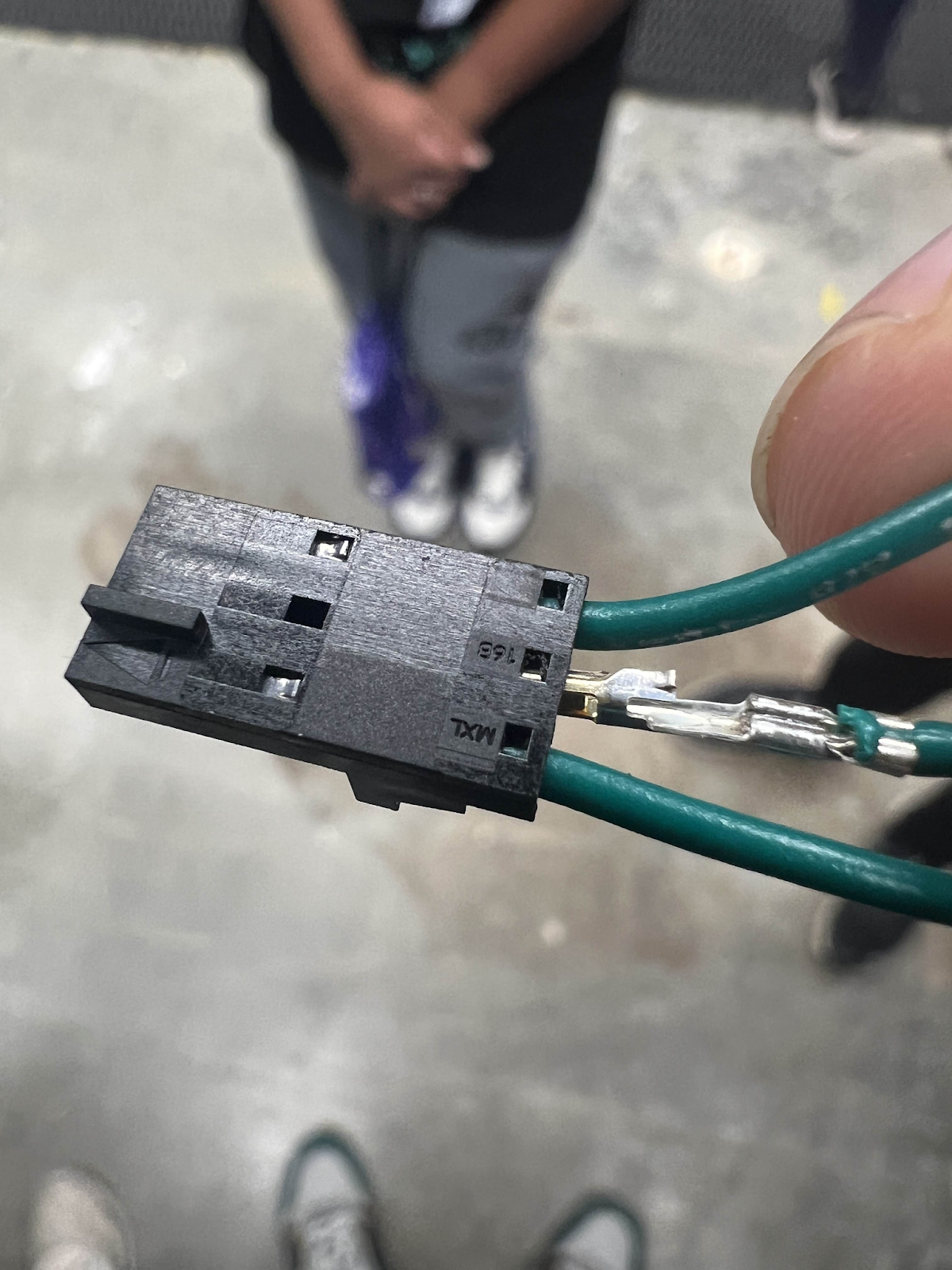
This is what connects to the housing.
Be sure that when you stick a crimp to the housing, the flap is going up the side with the hole to make sure the crimp is the right orientation and locks.
As always, be sure to pull test and have someone else pull test.
Use this for quick reference to an ideal crimp: