
Frame
When construction your frame, you'll need
1) 2x1s for the base (Qty - 4)
2) Bellypan (Qty - 1)
3) Mounting tubes (Qty - 1 or 2)
Note - Wall thickness of .100" or thicker = thick wall (good for chassis due to durability and high impact resistance)
Bellypan
- Has small holes in certain areas known as grommet holes to allow for electrical components to mount, and has holes along the perimeter for mounting onto chassis. All bellypans have a cut extrusion pattern along the surface which saves weight and makes it look nice, which is known as pocketing
-
- Laser cut by sponsors
- Typically 1/16" to 1/4" in thickness
- Thicker bellypans have smoother driving due to lower center of gravity
-
Mounting Tubes
- Mounting tubes are integrated into the frame design for structural support and for mounting separate subsystems like shooters, intakes, climbers, etc.
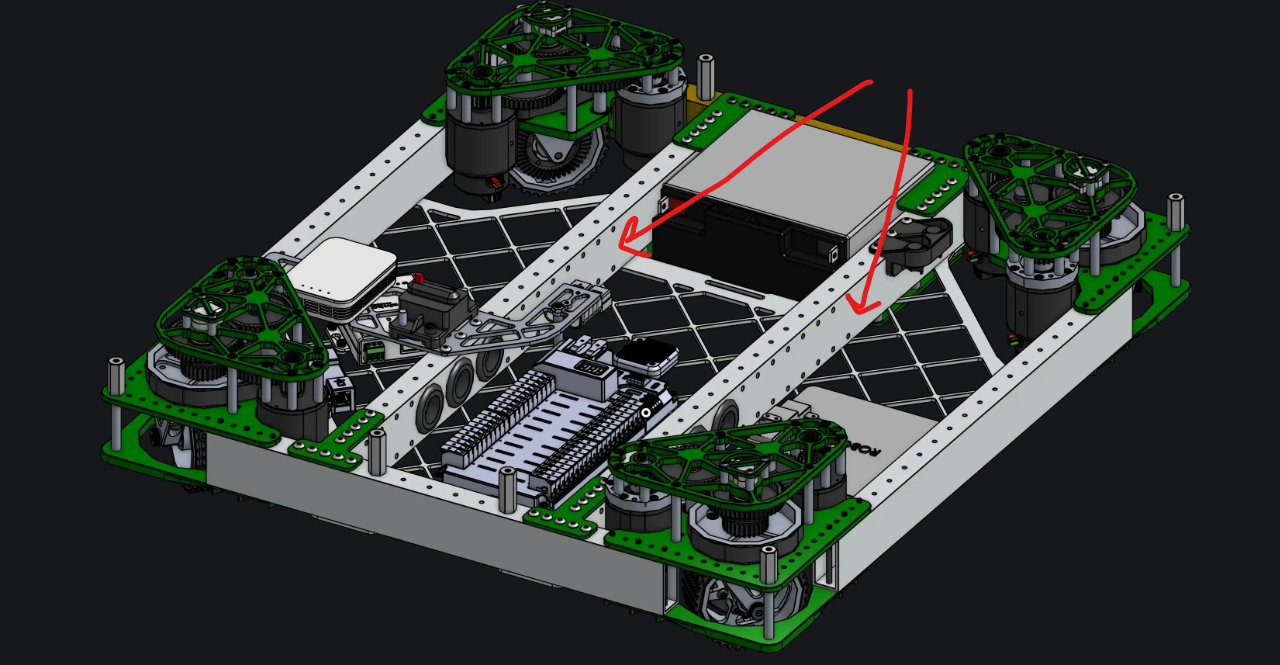
- Place battery first when designing drivetrain as it is the heaviest so you can take COM into account (important for deciding how smooth your robot can drive)
- Tungsten sheets are heavy and good for COM, but very expensive (Insert mcmaster carr tungsten sheet price pic)
- When designing your drivebase, your main goal should be maximizing COM while maintaining efficient mass to incorporate toher subsystems in the future
- Acceleration is prioritized in games which require lots of change of direction and a need for a fast topspeed accumulation
- Tall robots which have a need for speed require heavier drivebases to maintain balance
- If geared too tall, it means it takes too long to reach topspeed
- Robots geared too high will do better with pushing (kinda like torque) while bots geared for top speed won't (Speed is inverse of torque)